Walkways & Shared Paths
Elevated walkways, coastal walks, wetland access, shared paths, park infrastructure and public pedestrian routes.


DM Composites | Public Infrastructure
Boardwalks. Bridges. Walkways. Stairs. Viewing Platforms.
DM Composites delivers engineered FRP public infrastructure for councils, government agencies, civil contractors, landscape architects, developers and infrastructure asset owners across Australia and New Zealand.
From pedestrian boardwalks and bridges to viewing platforms, stairs, walkways and public access structures, our solutions are developed around long-term durability, safe public access and the actual conditions of the site.
Explore Public Infrastructure
Explore our dedicated infrastructure pages for more detailed information on structural systems, applications, project considerations and completed DM Composites work.

Engineered boardwalk systems for parks, wetlands, coastal areas, shared paths, recreational facilities and public open spaces.

Lightweight pedestrian bridge systems for shared paths, waterways, parks, trails, wetlands and difficult-access environments.
Elevated walkways, coastal walks, wetland access, shared paths, park infrastructure and public pedestrian routes.
Engineered FRP stairs, stringers, treads, landings, handrails, balustrades and intermediate platforms.
Public viewing structures for coastlines, waterways, parks, natural landscapes, reserves and walking-trail networks.
FRP access and maintenance platforms for utilities, public facilities, water assets and government infrastructure.
Infrastructure at a Glance
Public-access infrastructure can combine structural framing, walking surfaces, decking, stairs, handrails and site-specific interfaces into a coordinated solution.
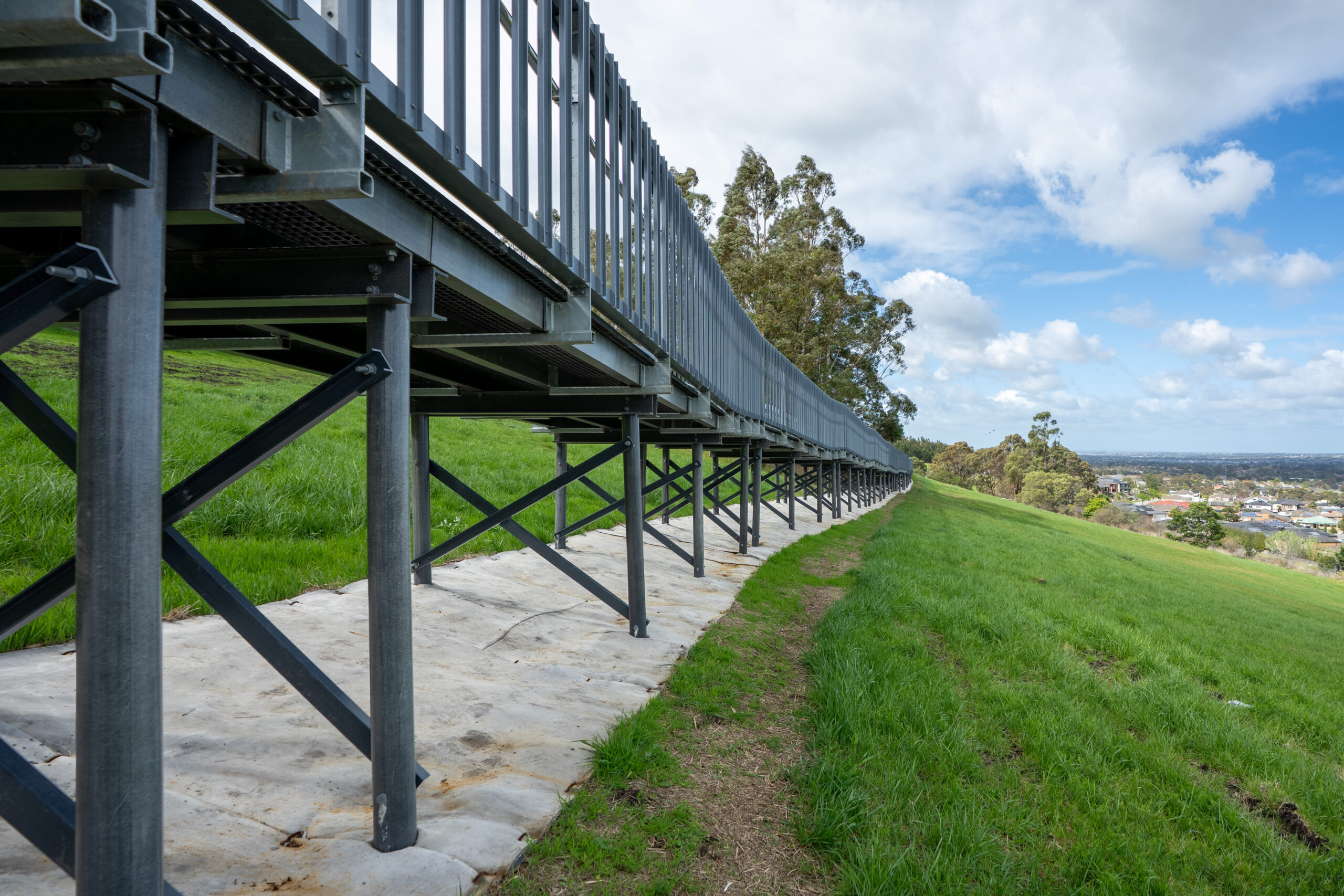
Structural profiles can form bearers, joists, beams, stringers and supporting frames across public-access structures.

Boardwalks, walkways and access structures are coordinated around the conditions of the site and intended users.

Walking surfaces can be selected around appearance, drainage, slip resistance, accessibility and environmental exposure.

Modular stairs and platforms can respond to steep, coastal and difficult-access public environments.
Built for Australian Public Environments
Public infrastructure can be continuously exposed to rain, humidity, saltwater, coastal atmosphere, flooding, UV exposure, wetlands, ground moisture and constant public use.
DM Composites considers how the complete structure will perform throughout its service life rather than treating FRP as an isolated product.
The lightweight and modular nature of FRP can also simplify construction where access is restricted by waterways, vegetation, steep terrain, sensitive environments or existing public interfaces.
Why FRP for Public Infrastructure?
FRP combines corrosion resistance, low maintenance, lightweight construction and durable performance in a material system suited to challenging infrastructure environments.

FRP does not rust like conventional steel, making it particularly valuable around saltwater, waterways, wetlands and persistent moisture.

FRP structural components do not undergo the timber rot and fungal decay associated with prolonged moisture exposure.

Lower structural weight can simplify transport, handling, lifting, modular assembly and access to difficult project sites.

FRP avoids many of the painting, corrosion-treatment and timber-maintenance requirements associated with conventional materials.

Components can be fabricated and assembled under controlled conditions before being transported to site for final installation.
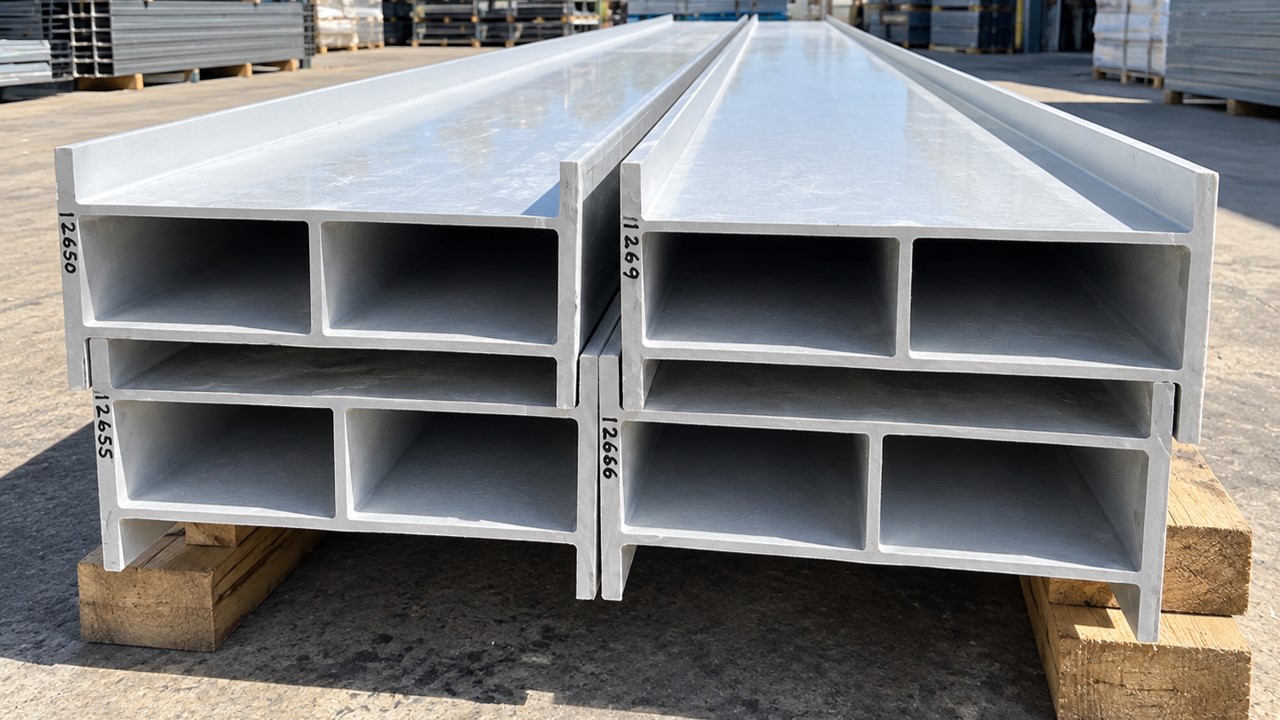
FRP can provide additional material advantages around electrical assets, rail infrastructure and specialist environments.
Designed Around the Environment
DM Composites develops structural and construction solutions around actual environmental, access, hydraulic and public-use constraints.
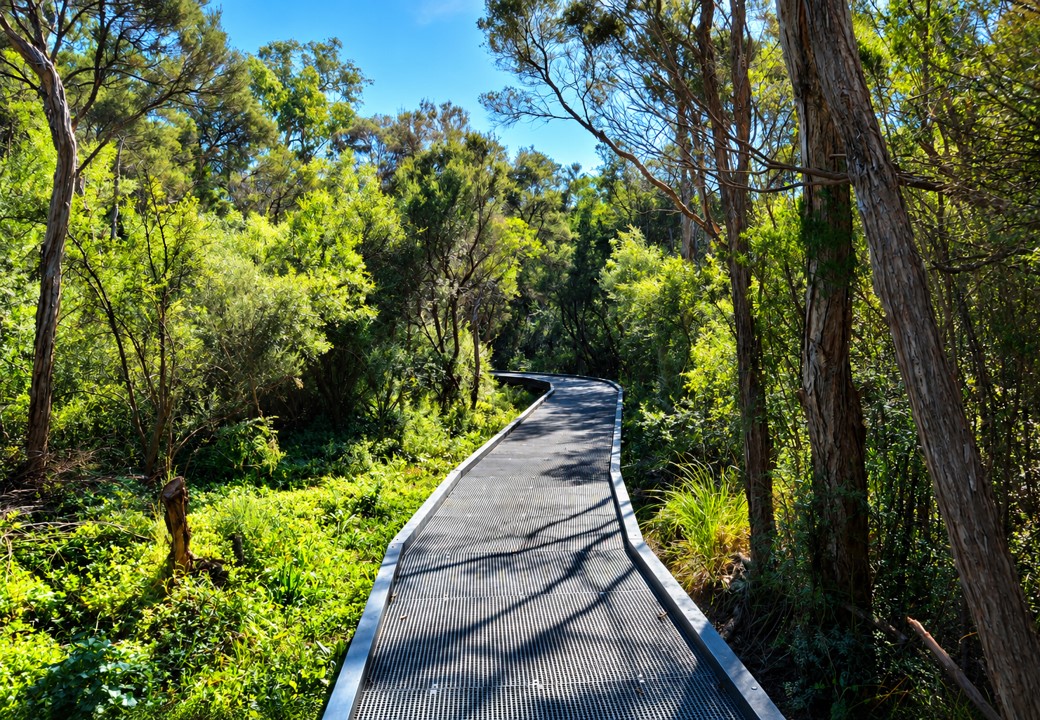
FRP can support safe public access through natural areas while reducing reliance on high-maintenance structural materials.

FRP provides a corrosion-resistant material option where salt spray, moisture and marine exposure can accelerate deterioration.
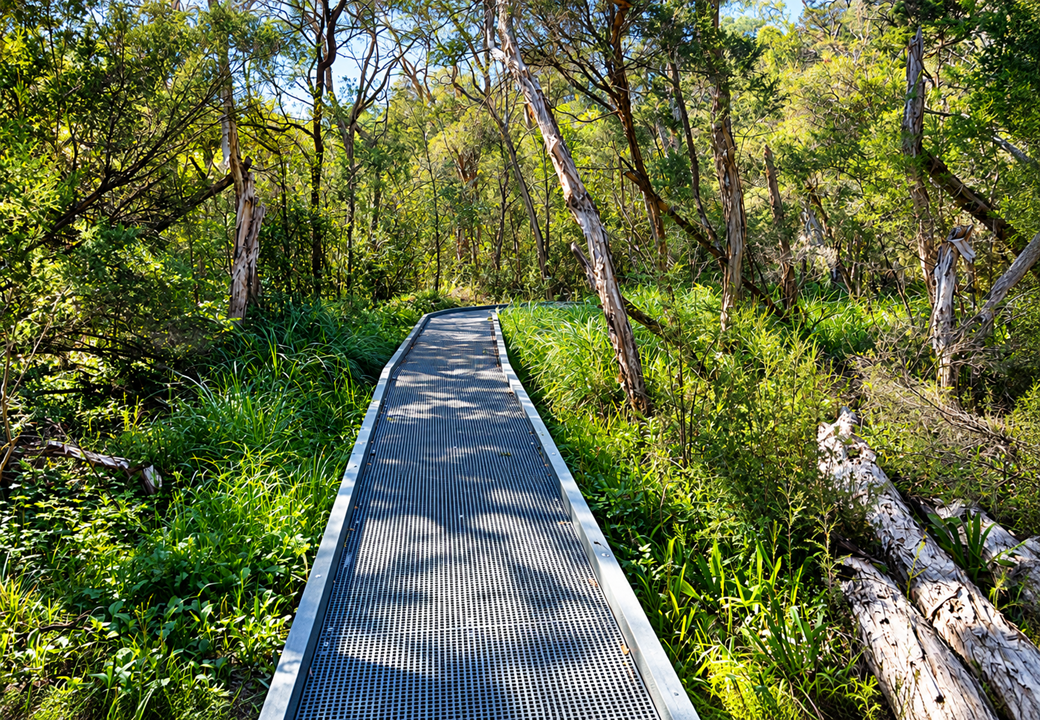
Lightweight modular components can reduce lifting requirements, minimise on-site fabrication and support lower-disturbance construction methodologies.

Boardwalks, bridges and access structures within flood-prone environments require project-specific engineering around hydraulic and structural actions.

Councils & Government
DM Composites works with local councils, government agencies, parks authorities, civil contractors and engineering consultants on public infrastructure throughout Australia.
Typical projects include boardwalk replacements, pedestrian bridges, shared-path upgrades, coastal access, park infrastructure, walking trails, viewing platforms, lookouts, stairs, fishing platforms and public walkways.
Our involvement can begin during early concept development, tendering, value engineering, procurement or detailed design.
Accessibility & Public Safety
Depending on the structure and intended use, design may need to consider accessibility, pedestrian safety, surface geometry and project-specific loading requirements.
The applicable standards depend on the project, structure, location, loading and intended use. Engineering and compliance requirements should therefore be assessed for the specific project.
Complete FRP Structural Systems
DM Composites brings structural framing, walking surfaces, decking, handrails and specialist infrastructure solutions together into a coordinated public-access system.
FRP structural beams, channels, angles and hollow sections for primary and secondary structural framing.
Walking SurfacesFRP grating systems for pedestrian walking surfaces, boardwalks, stairs, platforms and public access.
Composite DeckingTimber-look WPC composite decking for boardwalks, viewing platforms and public open spaces.
Safety SystemsHandrails, balustrades and safety systems integrated into public-access infrastructure.
Public AccessComplete boardwalk structures integrating framing, decking, handrails, foundations and access interfaces.
Coastal & MarineComposite infrastructure solutions for coastal, foreshore and marine public-access environments.
From Product Supply to Complete Construction
DM Composites can support public infrastructure projects from engineered FRP supply through to integrated construction.
For contractors and clients requiring an engineered FRP package.
Integrated project delivery from engineering through to construction and handover.
Construction of public infrastructure where the design has already been completed and issued for construction.
Engineering & Design
FRP should be engineered around its own material characteristics and the actual structural, environmental and construction requirements of the project.
Foundations & Substructures
Foundation selection depends on geotechnical conditions, structural loads, environmental constraints, access and project-specific requirements.
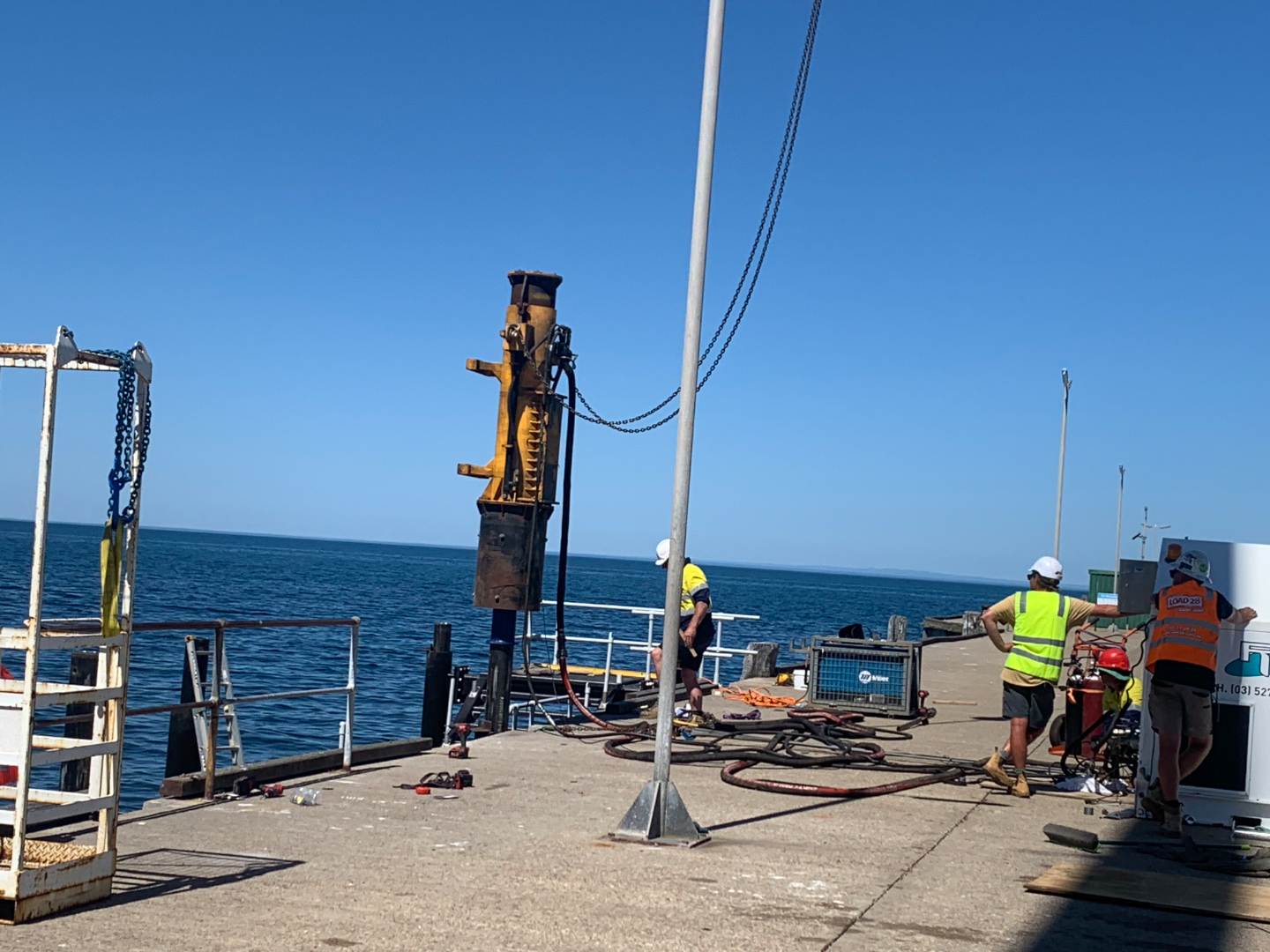
Depending on the project, structures can interface with bored concrete piers, driven piles, screw piles, micropiles, concrete footings, headstocks, steel supports, FRP supports, existing structures and abutments.
Coordinating the foundation and superstructure early helps improve buildability, structural alignment and installation methodology.
Prefabrication & Modular Construction
FRP lends itself to controlled off-site prefabrication, improving dimensional control and reducing cutting, drilling and assembly required on site.
FRP vs Timber vs Steel
No single material is correct for every public structure. FRP can provide substantial advantages where corrosion, rot, maintenance and installation weight are key considerations.
| Feature | FRP | Timber | Steel |
|---|---|---|---|
| Corrosion | Does not rust | Not applicable | Can corrode |
| Rot | Does not rot like timber | Species and treatment dependent | Not applicable |
| Weight | Lightweight | Relatively lightweight | Heavy |
| Coastal Use | Excellent when correctly specified | Species and treatment dependent | Requires corrosion protection |
| Maintenance | Generally low | Treatment or replacement may be required | Coatings may require maintenance |
| Electrical Conductivity | Non-conductive | Generally non-conductive | Conductive |
| Modular Construction | Excellent | Good | Good |
| Consistency | Manufactured | Natural variation | Manufactured |
| Structural Design | FRP-specific | Timber-specific | Steel-specific |
Long-Term Asset Performance
Public infrastructure can generate significant expenditure through maintenance, closures, mobilisation and future access requirements.
FRP can reduce many corrosion and rot-related maintenance requirements, which can be particularly valuable for assets over water, in wetlands, on remote trails or where future maintenance access is difficult.
Public Infrastructure Projects
Explore selected DM Composites projects across elevated boardwalks, pedestrian access, flood recovery and public infrastructure.

Elevated FRP boardwalk and public pedestrian infrastructure.
View Project →
Elevated coastal pedestrian infrastructure designed for demanding exposure.
View Project →
Public access infrastructure delivered as part of flood recovery works.
View Project →
Durable pedestrian infrastructure supporting long-term public access.
View Project →Why DM Composites?
Our capability extends beyond supplying individual FRP components. We understand how engineering, products, fabrication, foundations and construction need to come together to deliver a complete public asset.
Composite materials and engineered FRP infrastructure are core areas of DM Composites' work.
We can work from concept drawings, tender documentation or existing designs to develop buildable FRP solutions.
Structural profiles, grating, decking, handrails, connections and project-specific components can be coordinated together.
Structural members and modular assemblies can be fabricated before delivery to reduce site work.
For construction projects, DM Composites can manage site installation and associated construction activities.
Engineering, framing, decking, handrails, foundations, fabrication, installation and handover can be coordinated through one team.
Who We Work With
We can become involved during early design development, tendering, value engineering, procurement or construction.
Early Contractor Involvement
Early involvement can help project teams identify opportunities in structural arrangement, material selection, spans, connections, modularisation and construction methodology.
This can be particularly useful where an existing timber or steel public asset is being considered for replacement with FRP.
Frequently Asked Questions
Common questions about FRP boardwalks, pedestrian bridges, coastal environments, flood-prone sites and complete project delivery.
FRP public infrastructure includes boardwalks, pedestrian bridges, walkways, stairs, platforms and other public-access structures incorporating Fibre Reinforced Polymer structural products.
Yes. FRP can be incorporated into appropriately engineered pedestrian bridge structures including structural framing, decking, connections and handrails.
Yes. FRP structural profiles and grating are particularly useful for boardwalks in wetlands, parks, coastal areas and waterways because they resist corrosion and moisture-related deterioration.
Yes. Correctly specified FRP is well suited to many coastal environments because it does not rust like conventional steel. The complete structural system and connections still need to be selected for the actual exposure conditions.
No. FRP does not undergo timber rot or fungal decay, providing an important durability advantage in wet environments.
FRP can be used in appropriately engineered flood-prone structures. Design must consider hydraulic loads, debris, buoyancy, scour, foundations and other project-specific flood requirements.
Yes. DMWOOD™ WPC composite decking can be integrated with FRP structural framing where a timber-inspired walking surface is preferred.
Depending on project requirements, options can include Standard Mesh FRP Grating, Mini Mesh FRP Grating, Micro Mesh FRP Grating, Heavy Duty FRP Grating and DMWOOD™ WPC composite decking.
No. Depending on the project, DM Composites can provide engineered supply packages or undertake complete construction including foundations, installation, QA and handover.
Yes. DM Composites delivers products and projects throughout Australia and can also support public infrastructure projects in New Zealand.
Planning a Public Infrastructure Project?
Whether you are replacing an existing timber boardwalk, designing a new pedestrian bridge, developing a coastal walkway or planning a viewing platform, our team can review the project and develop an appropriate FRP solution.
Enter your company details to access this resource.