Corrosion Resistant
FRP provides inherent resistance to corrosion and is particularly suitable for coastal, marine, water, wastewater and other aggressive environments.


DMBEAM™
DMBEAM™ is DM Composites' range of high-performance FRP structural profiles for infrastructure, marine, industrial and public access structures across Australia and New Zealand.
Manufactured using the pultrusion process, DMBEAM™ combines continuous glass fibre reinforcement with engineered resin systems to produce lightweight, corrosion-resistant structural sections with consistent mechanical properties.
What Are FRP Structural Profiles?
FRP structural profiles are structural sections manufactured from glass fibre reinforcement embedded within a polymer resin matrix. Most DMBEAM™ structural profiles are manufactured using pultrusion, a continuous process in which glass fibres are drawn through resin and formed through a heated die to create profiles with a consistent cross-section.
The resulting Fibre Reinforced Polymer sections provide high longitudinal strength while remaining considerably lighter than many conventional structural materials. Unlike steel, FRP does not rely on galvanising or painted coatings for its inherent corrosion resistance.
This makes DMBEAM™ particularly suitable for structures exposed to moisture, saltwater, wastewater and other corrosive environments.
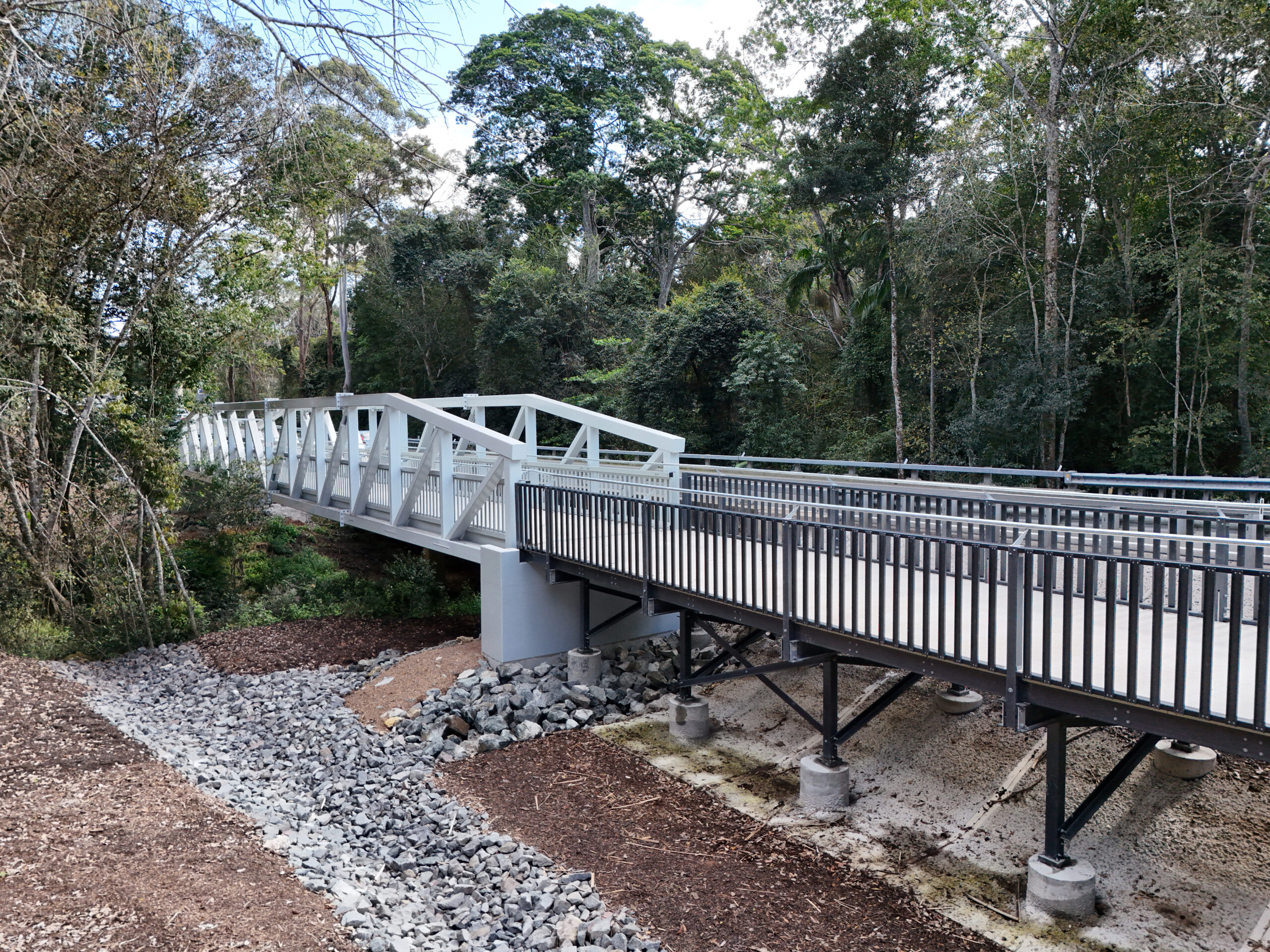


DMBEAM™ Profile Range
Explore the DMBEAM™ structural profile range. Select a profile below for a quick overview of its typical structural use.
Why Choose DMBEAM™?
DMBEAM™ combines pultruded FRP structural performance with practical advantages for transport, installation and long-term infrastructure use.
FRP provides inherent resistance to corrosion and is particularly suitable for coastal, marine, water, wastewater and other aggressive environments.
Lower component weight can assist transportation, handling, site access, installation, lifting and construction in remote or environmentally sensitive locations.
Pultruded FRP profiles provide excellent longitudinal mechanical performance relative to their weight when correctly selected and engineered.
FRP does not require routine galvanising or repainting to maintain its inherent corrosion resistance, supporting whole-of-life advantages in difficult-access environments.
FRP is electrically non-conductive and can be advantageous in electrical, rail, utilities and industrial environments.
Profiles can be cut, drilled and fabricated using appropriate equipment and procedures, with pre-cut and fabricated supply available for project requirements.
FRP Structural Profile Applications
Pultruded FRP structural profiles can form beams, bearers, joists, posts and supporting members across infrastructure exposed to moisture, flooding, saltwater and difficult access conditions.
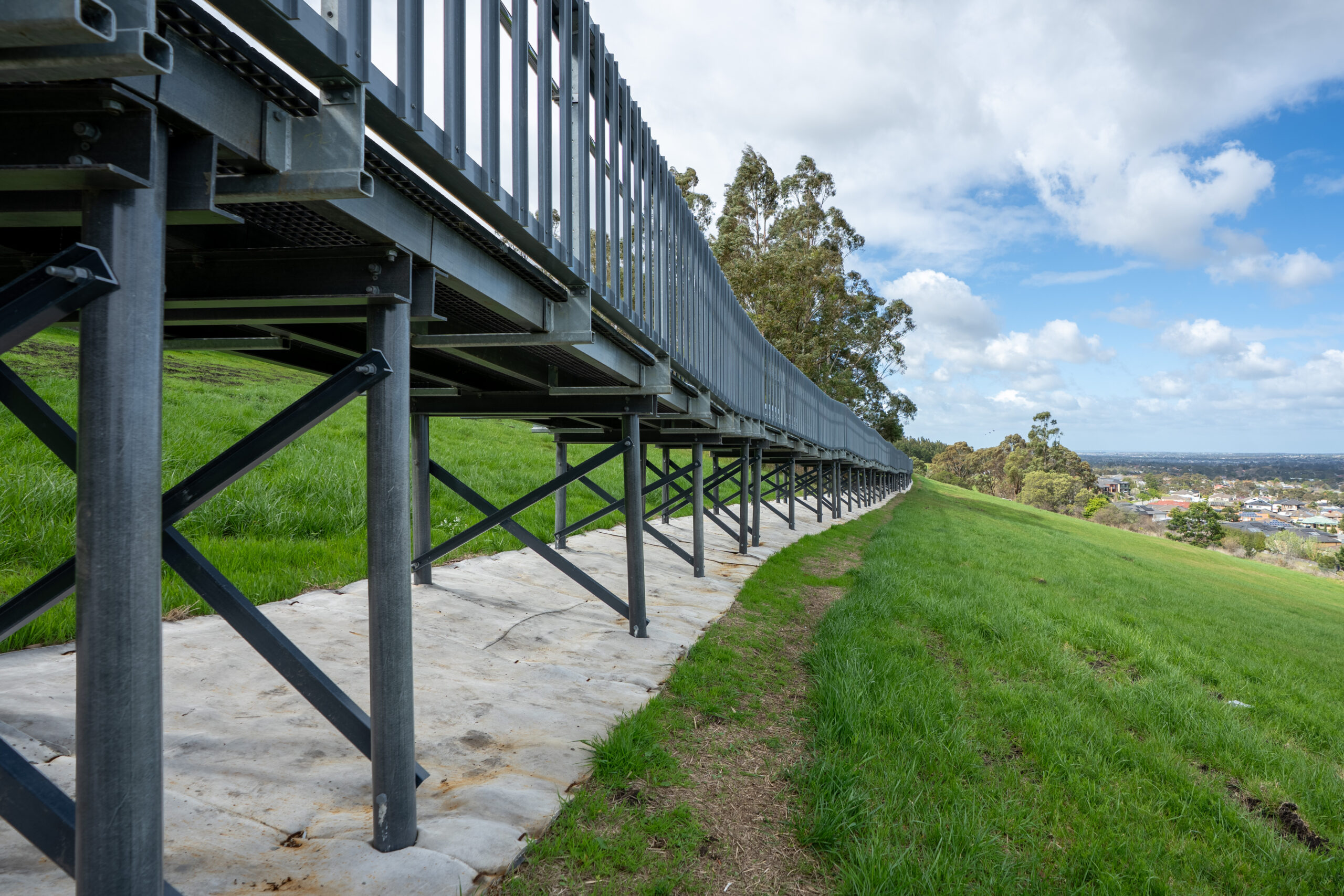
DMBEAM™ profiles can form the structural framework of elevated boardwalks, ramps and access structures, including bearers, joists, posts and bracing members.
Explore DMWALK™
Pultruded FRP profiles can be incorporated into primary and secondary pedestrian infrastructure framing where low weight, corrosion resistance and modular construction are important.
Engineered FRP Framing
DMBEAM™ is suited to jetties, marine walkways and coastal access structures where saltwater, spray and continuous moisture create significant corrosion challenges.
Explore DMMARINE™
DMBEAM™ can support access platforms, walkways, stair structures, grating supports, equipment frames, pump-station access and treatment-plant infrastructure.
Explore DMWASTE™Pultruded FRP Construction
Pultrusion draws glass fibres and reinforcement materials through a resin system and heated die to form the final section with reinforcement concentrated in the longitudinal direction.

A continuous manufacturing process used to create FRP profiles with a consistent cross-section and a high proportion of reinforcement running longitudinally through the member.

Continuous glass reinforcement is combined with resin and supporting reinforcement layers to provide the required structural and environmental performance of the finished profile.
FRP Structural Profiles vs Steel
FRP and steel have different mechanical characteristics. Material selection should consider structural, environmental, construction and whole-of-life requirements.
| Feature | FRP Structural Profiles | Steel |
|---|---|---|
| Corrosion resistance | Inherent | Usually requires galvanising/coating |
| Weight | Lightweight | Heavier |
| Electrical conductivity | Non-conductive | Conductive |
| Maintenance | Generally low | Corrosion protection may require maintenance |
| Site fabrication | Can be cut and drilled with suitable tools | Requires conventional metalworking |
| Coastal environments | Well suited when correctly specified | Requires appropriate corrosion protection |
| Material behaviour | Orthotropic / composite | Isotropic |
| Elastic modulus | Lower than steel | Higher |
| Design approach | FRP-specific engineering required | Conventional steel design |
| Thermal conductivity | Low | High |
FRP should not be treated as a direct like-for-like replacement for steel based purely on section dimensions. Modulus, connection design, deflection and directional material properties must be considered during structural design.
Structural Design of FRP Profiles
Pultruded FRP is orthotropic, meaning its mechanical properties vary according to the direction of the reinforcing fibres. For many FRP structures, serviceability and deflection can govern section selection before ultimate strength.
DMBEAM™ Profile Sizes & Availability
DMBEAM™ is available in multiple section types and sizes. Exact dimensions, lengths and structural properties vary by profile and should be confirmed against the current approved product information for the selected section. Available colours, resin systems and finishes can also be selected to suit the environmental exposure, structural application and project requirements.
The DMBEAM™ range includes I-beams, channels, angles, square hollow sections, rectangular hollow sections and other project-specific structural profiles.
Profile selection should consider loading, clear span, support conditions, deflection, connection design, environmental exposure and the requirements of the complete structure.
Available lengths depend on the selected profile, manufacturing requirements, transport limitations and order quantity. Profiles can also be supplied cut, drilled and fabricated for approved project requirements.


Standards & Engineering Requirements
DMBEAM™ profiles are specified as part of the complete engineered structure. For applications such as pedestrian bridges, the overall design is assessed against the relevant project requirements and applicable Australian Standards, including AS 5100 where required.
Structural design should consider applicable permanent, imposed, wind and other project-specific actions, together with spans, support conditions, deflection limits and connections.
DMBEAM™ can form part of industrial access structures designed with reference to AS 1657, including walkways, platforms, stairs, landings and access structures.
Where DMBEAM™ is incorporated into public pedestrian infrastructure, the complete structure can be designed with reference to applicable AS 1428 requirements.
DMBEAM™ can be incorporated into boardwalks, bridges, stairs, lookouts and related walking-track infrastructure designed with reference to the applicable AS 2156 series.
Where FRP profiles form part of pedestrian bridge infrastructure, the overall structure and applicable design actions should be assessed against relevant project and bridge design requirements.
FRP Connections & Fixings
DMBEAM™ structures may incorporate bolted connections, FRP connection plates, stainless steel fixings, galvanised steel components where appropriate, structural brackets, cleats, base plates, splice connections, grating supports and project-specific fabricated connections.
Connection design must consider bearing, shear, bolt spacing, edge distances and local stresses within the FRP material.

FRP Fabrication & Prefabrication
Prefabrication can reduce site cutting and drilling, improve dimensional control and accelerate installation, particularly on remote or difficult-access infrastructure projects.
Profiles can be cut to length, drilled and prepared for project-specific connections using appropriate fabrication procedures.
DM Composites can provide prefabricated frames, modular assemblies and project-specific packaging to reduce work required on site.
Fabrication scope can include shop drawings, bills of materials, member schedules and component identification.
Members can be prepared for project-specific connection details to support faster assembly and improved dimensional control.
Complete Engineered FRP Structures
Depending on project requirements, DM Composites' scope can include concept development, structural engineering, detailed design, profile selection, shop drawings, connection design, fabrication, procurement, project management, installation and engineering certification.

DMBEAM™ Project Experience
A selection of completed projects incorporating DM BEAM or pultruded FRP structural profiles.

DM BEAM and DM GRATE incorporated into the completed jetty renewal at St Georges Basin.
View Project
DM BEAM and DM GRATE used in the upgraded jetty structure for long-term marine exposure.
View Project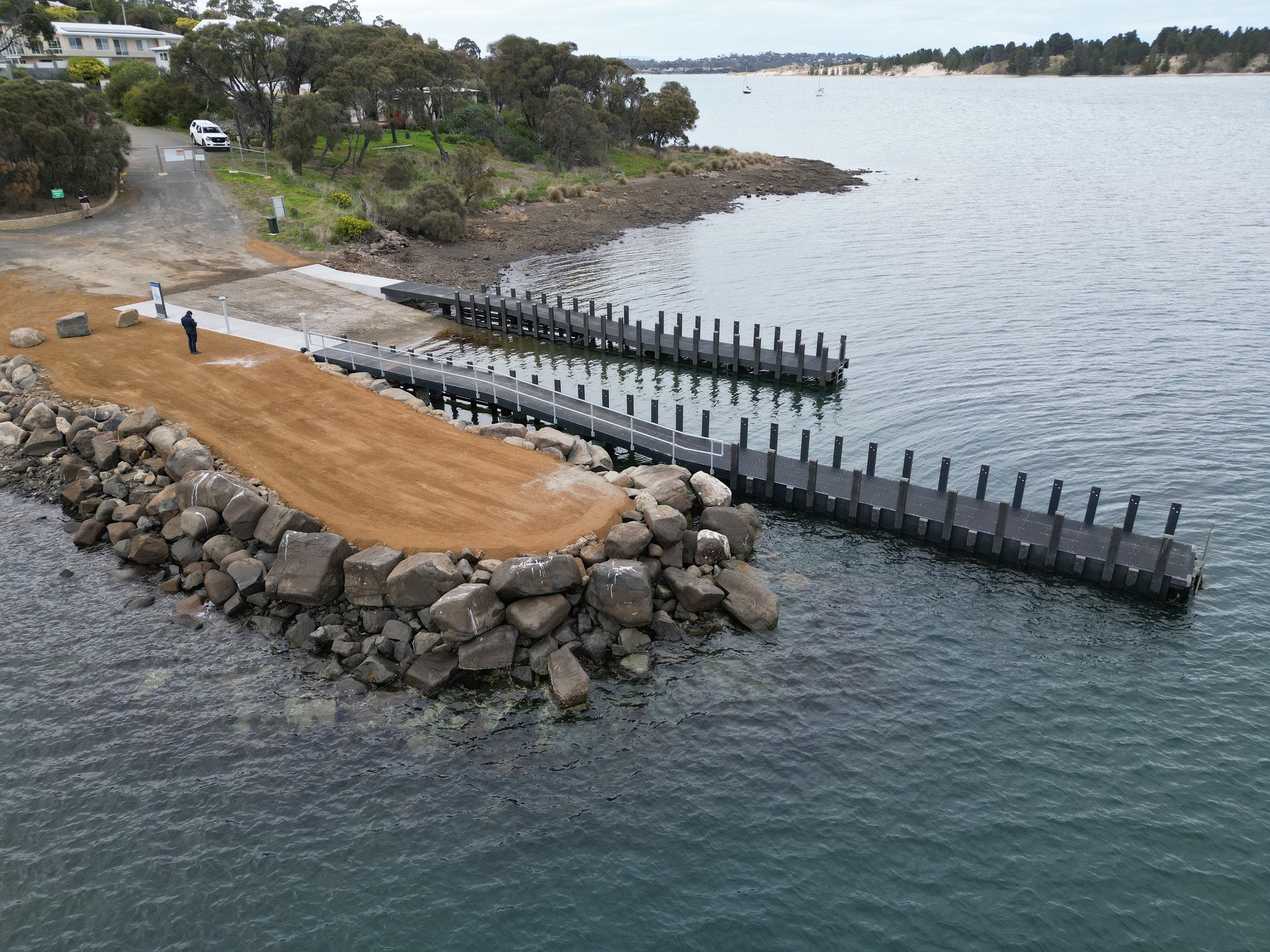
DM BEAM beams, bearers and joists form part of the completed modular FRP twin-jetty system.
View Project
Technical Support for Engineers & Specifiers
Depending on the selected product and project requirements, DM Composites can provide relevant technical information to assist with design and specification.
Why Specify DMBEAM™?
Rather than selecting structural profiles in isolation, DM Composites can assist with the complete structural application.
Structural loads, profile selection, clear spans, deflection requirements, connection design and supporting structures.
Environmental exposure, resin selection, design life, maintenance requirements and project-specific operating conditions.
Fabrication, installation requirements, interfaces with FRP grating, handrails, balustrades and other structural components.
Frequently Asked Questions
Key information about pultruded profiles, structural use, fabrication and environmental suitability.
FRP structural profiles are sections manufactured from glass fibre reinforcement embedded within a polymer resin matrix. Pultruded profiles are available in shapes including I-beams, channels, angles, square tubes and rectangular tubes.
FRP stands for Fibre Reinforced Polymer or Fibre Reinforced Plastic. Glass-fibre-based structural products may also be referred to as GFRP structural profiles.
Pultrusion is a continuous manufacturing process in which glass fibres and reinforcement materials are drawn through resin and then through a heated die that forms the final structural section.
The DMBEAM™ range includes FRP I-beams, C-channels, angles, square tubes, rectangular tubes and other project-specific structural sections. Availability depends on the selected profile.
FRP can provide an alternative to steel for many applications, particularly where corrosion resistance, weight and maintenance matter. It should not be substituted solely by matching section dimensions; FRP-specific engineering is required.
A simple strength comparison can be misleading. Pultruded FRP can provide a high strength-to-weight ratio, but its elastic modulus is lower than steel, making deflection and serviceability important design considerations.
FRP has a significantly lower material density than steel, which can result in substantially lighter components. The actual difference depends on the sections and structural requirements being compared.
FRP does not rust in the same manner as ferrous steel. Its inherent corrosion resistance is a key reason it is used in coastal, marine, water, wastewater and industrial environments.
Correctly specified FRP structural profiles are well suited to many marine and coastal applications. The resin system, connections and fixings should be selected for the specific exposure conditions.
Yes. FRP beams, channels, tubes and angles can form the structural framing of boardwalks and can be integrated with DMGRATE™ grating and other DMC components.
FRP profiles can form part of appropriately engineered pedestrian bridge structures where loads, spans, deflection limits, connections, exposure and project requirements are properly considered.
Yes. Pultruded FRP profiles can be cut and drilled using appropriate tools and procedures. Profiles can also be supplied pre-cut, drilled and fabricated to approved shop drawings.
FRP members can use engineered bolted connections, plates, brackets, cleats and other systems. Connection design must consider bearing, shear, bolt spacing, edge distances and local stresses.
Standard manufacturing and stock lengths depend on the particular DMBEAM™ section. Project-specific lengths may be available subject to profile, manufacturing, transport and order requirements.
FRP generally requires relatively low corrosion-related maintenance because it does not rely on galvanising or painted coatings for its inherent corrosion resistance.
Service life depends on resin system, structural loading, environmental exposure, UV exposure, connections, installation and maintenance. Design-life requirements should be considered at project level.
Need FRP Structural Profiles for Your Project?
Whether you require individual FRP beams and channels or a complete engineered FRP structure, DM Composites can assist with product selection, technical information, fabrication and project-specific solutions across Australia and New Zealand.
Enter your company details to access this resource.