01
Zero Corrosion
GFRP does not rust, eliminating reinforcement corrosion caused by embedded steel as a deterioration mechanism.

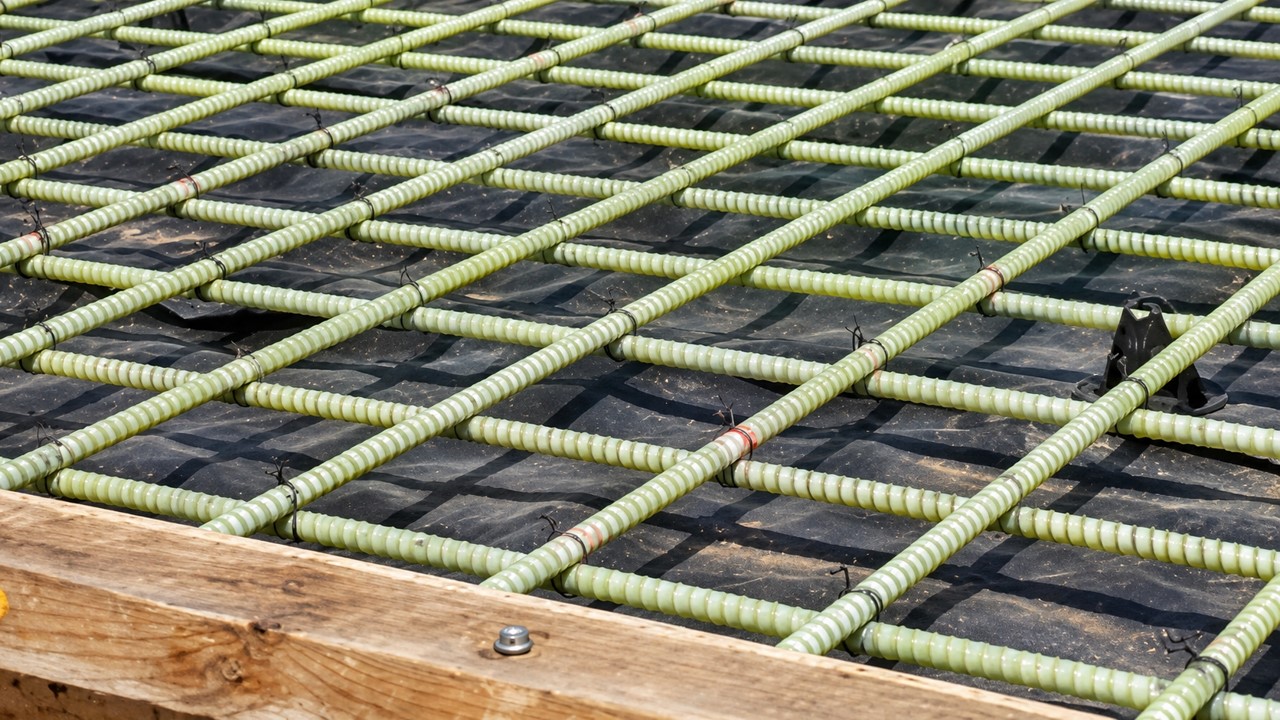
DMREO™ | GFRP Concrete Reinforcement
Zero corrosion. High tensile strength. Up to 4× lighter than steel.
DMREO™ is DM Composites' range of Glass Fibre Reinforced Polymer reinforcing bars for concrete structures across Australia and New Zealand. Engineered as a non-corrosive alternative to conventional steel reinforcement, DMREO™ combines high-strength glass fibres with an engineered resin matrix for durable reinforcement in demanding environments.
What is GFRP Rebar?
GFRP rebar, or Glass Fibre Reinforced Polymer rebar, is non-metallic reinforcement manufactured from high-strength glass fibres embedded within a polymer resin matrix.
Reinforcing fibres run longitudinally through the bar to provide tensile strength, while the external surface is engineered to develop bond between the reinforcement and surrounding concrete.
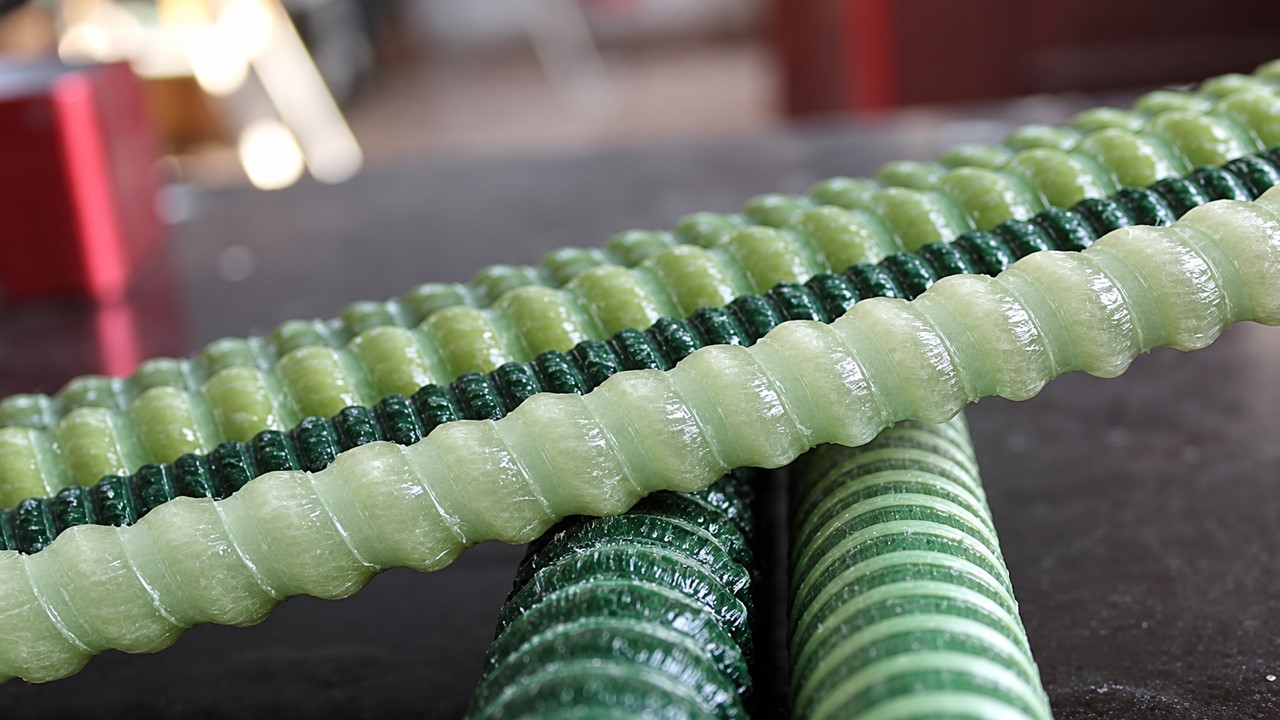
DMREO™ is available with ribbed, sand-coated and spiral-wrapped surface configurations depending on the selected product and project requirements.
GFRP reinforcement provides an alternative to conventional steel where corrosion resistance, low weight, electrical non-conductivity or magnetic transparency are important.
Why Choose DMREO™?
DMREO™ removes steel reinforcement corrosion from the durability equation while providing a lightweight, high tensile strength, non-conductive and non-magnetic reinforcement system.
GFRP does not rust, eliminating reinforcement corrosion caused by embedded steel as a deterioration mechanism.
Eliminating reinforcement corrosion can reduce corrosion-related cracking, spalling, patch repairs and future maintenance interventions.
DMREO™ can weigh approximately one-quarter of conventional steel reinforcement, simplifying handling, transport and placement.
GFRP provides high tensile strength for reinforced concrete applications when engineered using the applicable FRP properties and design methodology.
Electrically non-conductive reinforcement is attractive around substations, rail systems, high-voltage infrastructure and sensitive equipment.
GFRP provides reinforcement for structures where conventional steel could interfere with magnetic fields or specialist instrumentation.
Grade 45 & Grade 60
Grade selection should be based on the certified mechanical properties, structural design, serviceability requirements and application rather than simply treating one grade as universally better than another.
Grade 45 provides a cost-effective GFRP reinforcement solution for general concrete applications where the specified mechanical and serviceability requirements can be achieved using the standard-modulus system.
Grade 60 provides a higher-modulus GFRP reinforcement option for applications requiring increased reinforcement stiffness and where deflection, crack control and serviceability influence the design.
Fibre-Reinforced Polymer Bars
Australian Compliance
AS 5204 establishes requirements for fibre-reinforced polymer bars used as internal, non-prestressed reinforcement in concrete, including straight and bent FRP bars.
The standard addresses physical, mechanical and durability characteristics of FRP reinforcement. DMREO™ should be specified using the applicable product documentation demonstrating compliance with AS 5204:2023.
DM Composites can provide relevant technical and compliance documentation to support engineering review and project specification.
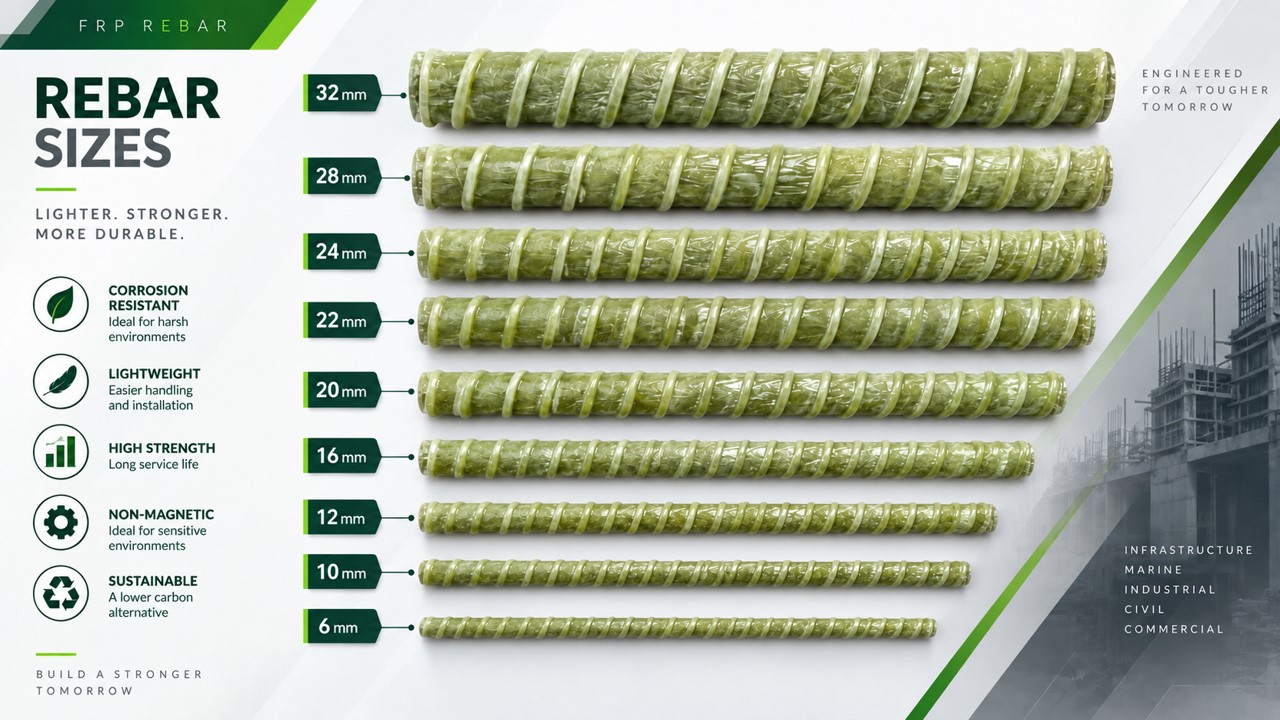
DMREO™ GFRP Rebar Sizes
DMREO™ is available across multiple nominal bar diameters for residential, commercial, civil infrastructure, marine and specialist reinforced-concrete applications.
Current availability, standard lengths and Grade 45 or Grade 60 options should be confirmed with DM Composites for the project.
DMREO™ Product Range
DMREO™ extends beyond straight reinforcing bars to include factory-manufactured bent reinforcement and GFRP reinforcing mesh for appropriately designed concrete applications.
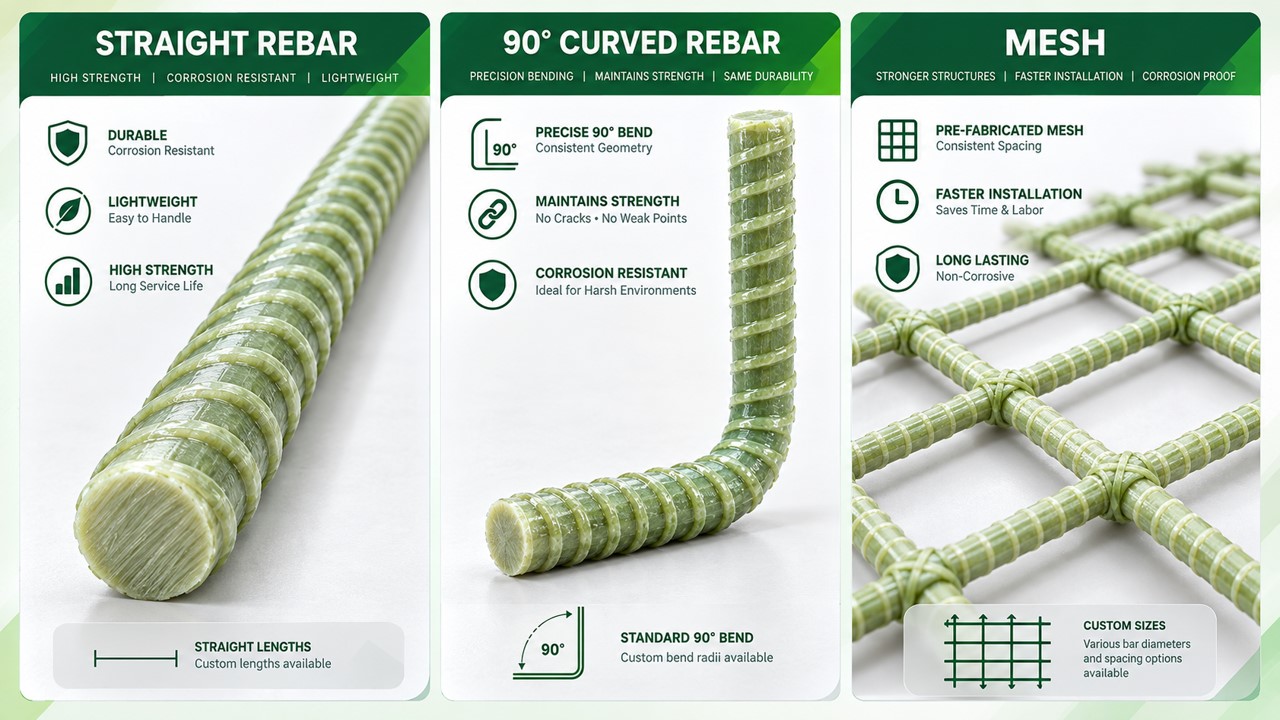
Straight DMREO™ bars are available across multiple nominal diameters and lengths for slabs, footings, foundations, walls, pavements, bridge structures, marine concrete, precast elements and other reinforced-concrete applications.
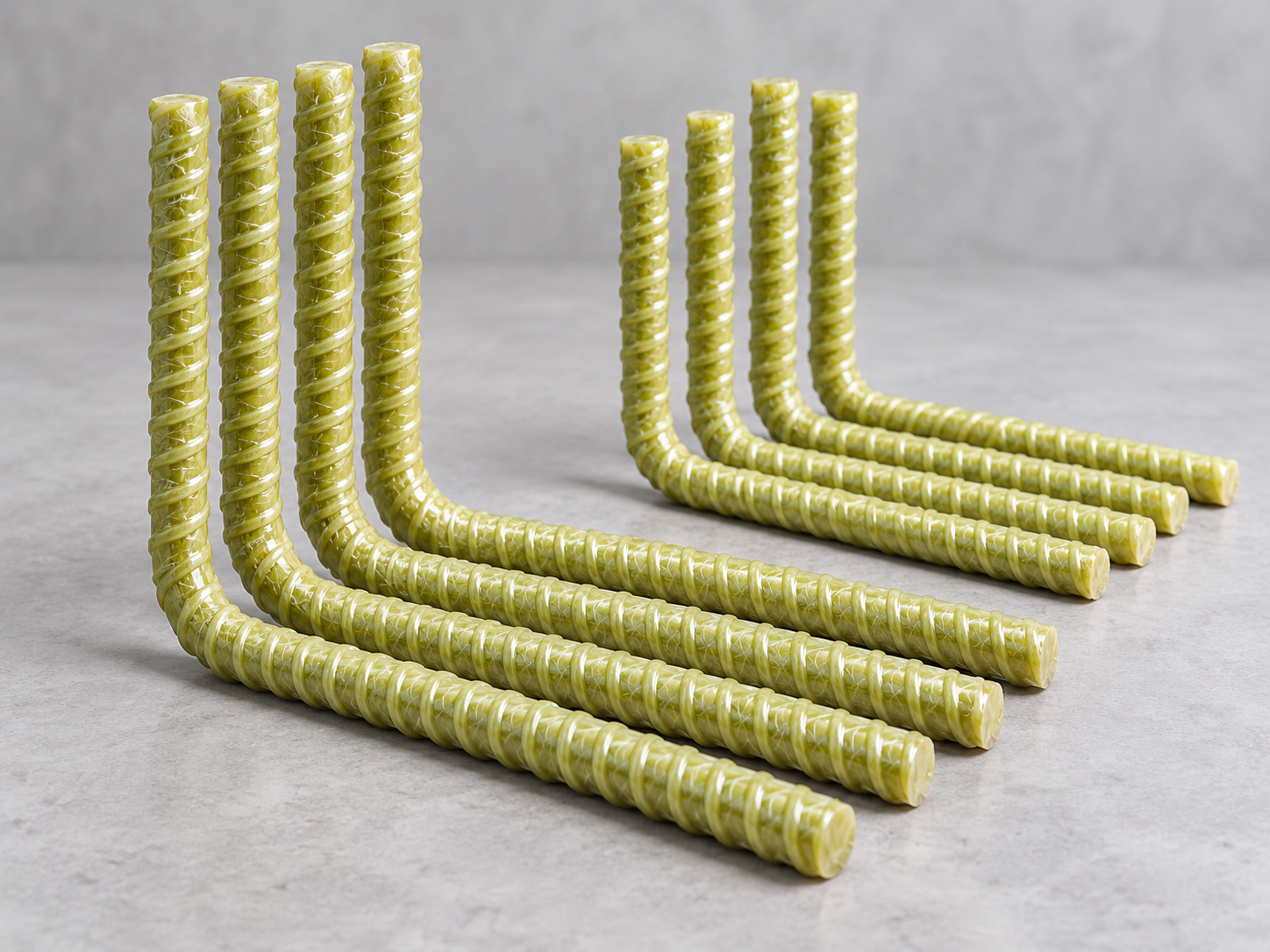
Factory-manufactured reinforcement can be supplied for 90-degree bends, L-bars, starter bars, corner reinforcement and other project-specific geometries identified in the reinforcement design.
Prefabricated GFRP reinforcement can provide consistent bar spacing across larger areas such as slabs, pavements, footpaths, precast elements and other concrete structures.
GFRP Rebar vs Steel Rebar
GFRP has materially different tensile, modulus, ductility, failure and bending characteristics. Reinforced concrete using GFRP must therefore be engineered specifically for FRP reinforcement.
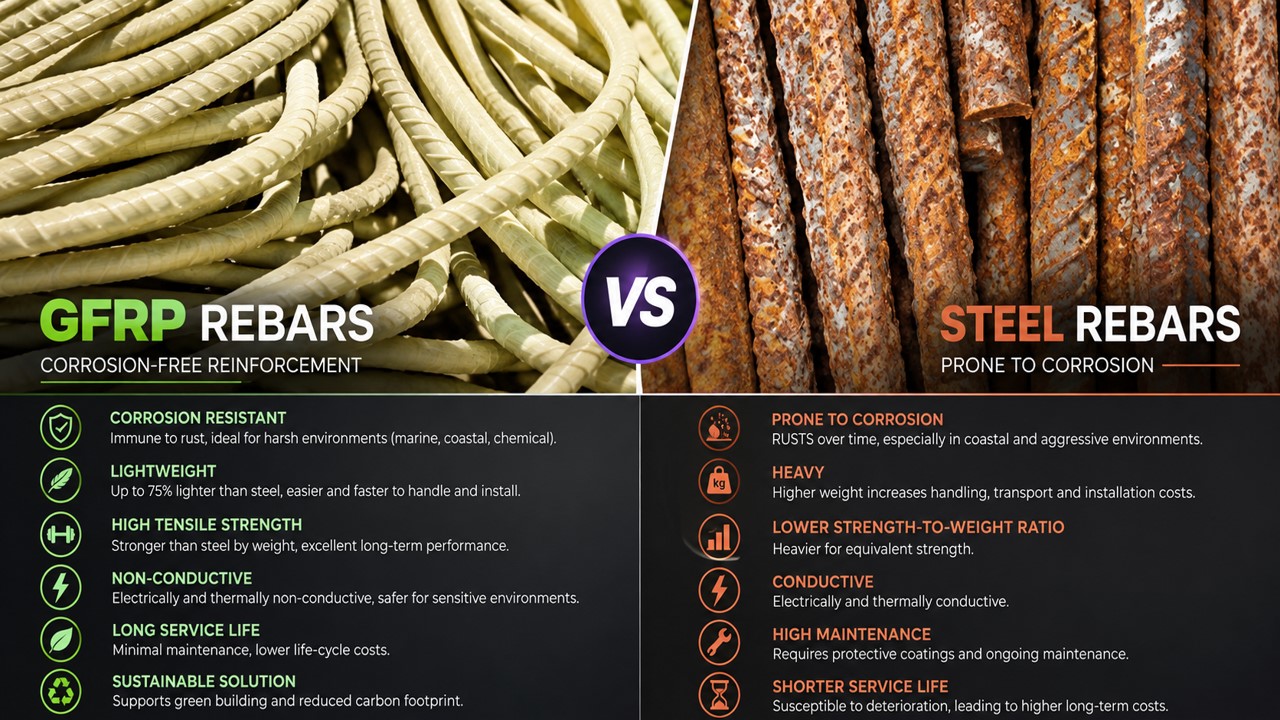
GFRP can provide very high tensile strength, but comparing it with steel using a single stronger-or-weaker statement is misleading.
GFRP behaves linearly elastically to failure and has a lower modulus than conventional reinforcing steel. The reinforcement design must account for GFRP-specific structural and serviceability behaviour.
| Property | DMREO™ GFRP | Steel Rebar |
|---|---|---|
| Rust | Does not rust | Can rust |
| Reinforcement corrosion | Eliminated as a steel-corrosion mechanism | Possible |
| Weight | Approximately ¼ of steel | Heavy |
| Electrical conductivity | Non-conductive | Conductive |
| Magnetic properties | Non-magnetic | Magnetic |
| Chloride resistance | Excellent | Corrosion risk |
| Saltwater environments | Well suited | Requires durability measures |
| Maintenance impact | Reduced corrosion-related maintenance | Corrosion can require remediation |
| Tensile behaviour | Linear elastic to failure | Ductile / yielding |
| On-site bending | Generally no | Yes |
| Modulus | Lower than steel | Higher |
| Design | GFRP-specific | Conventional reinforced-concrete design |
Stop Designing for Rust
GFRP removes rusting steel reinforcement from the corrosion deterioration mechanism.
GFRP Rebar Applications
DMREO™ can be considered across marine, civil, water, residential, electrical and specialist infrastructure where GFRP reinforcement is appropriately engineered for the application.
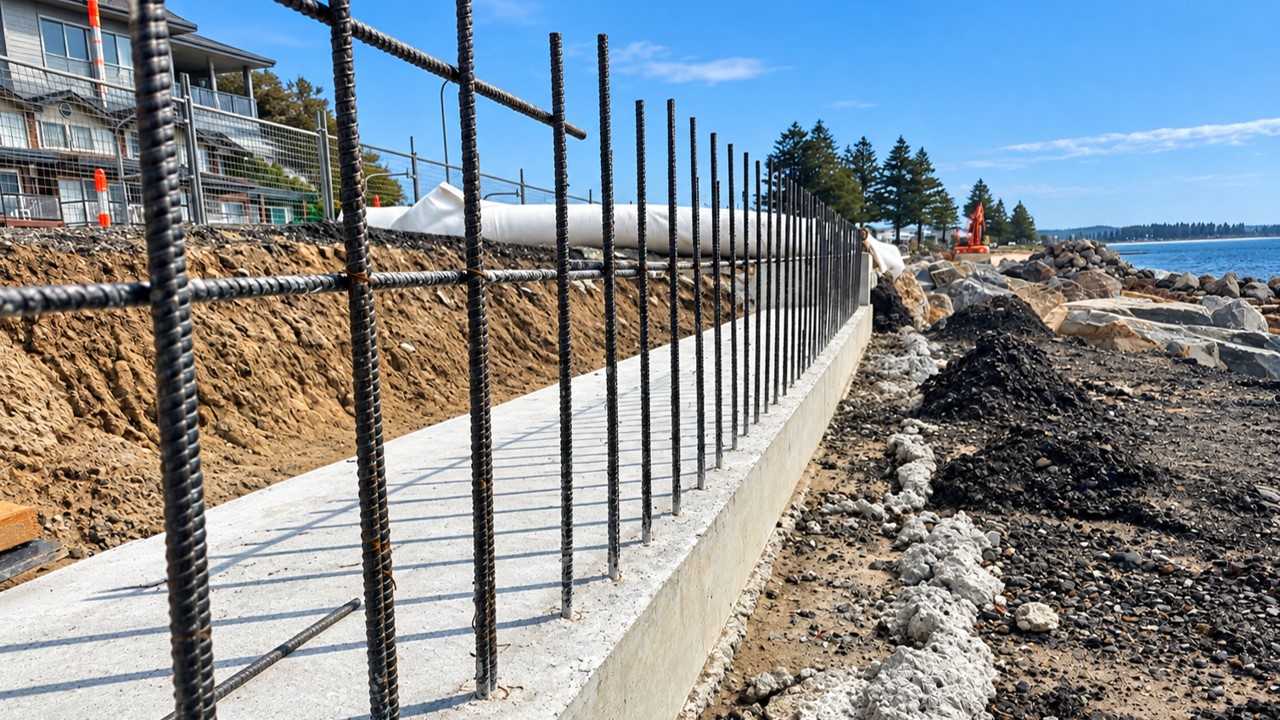
Corrosion-resistant reinforcement for seawalls, wharves, jetties, piers, boat ramps, marine slabs and other concrete structures exposed to saltwater and chloride environments.
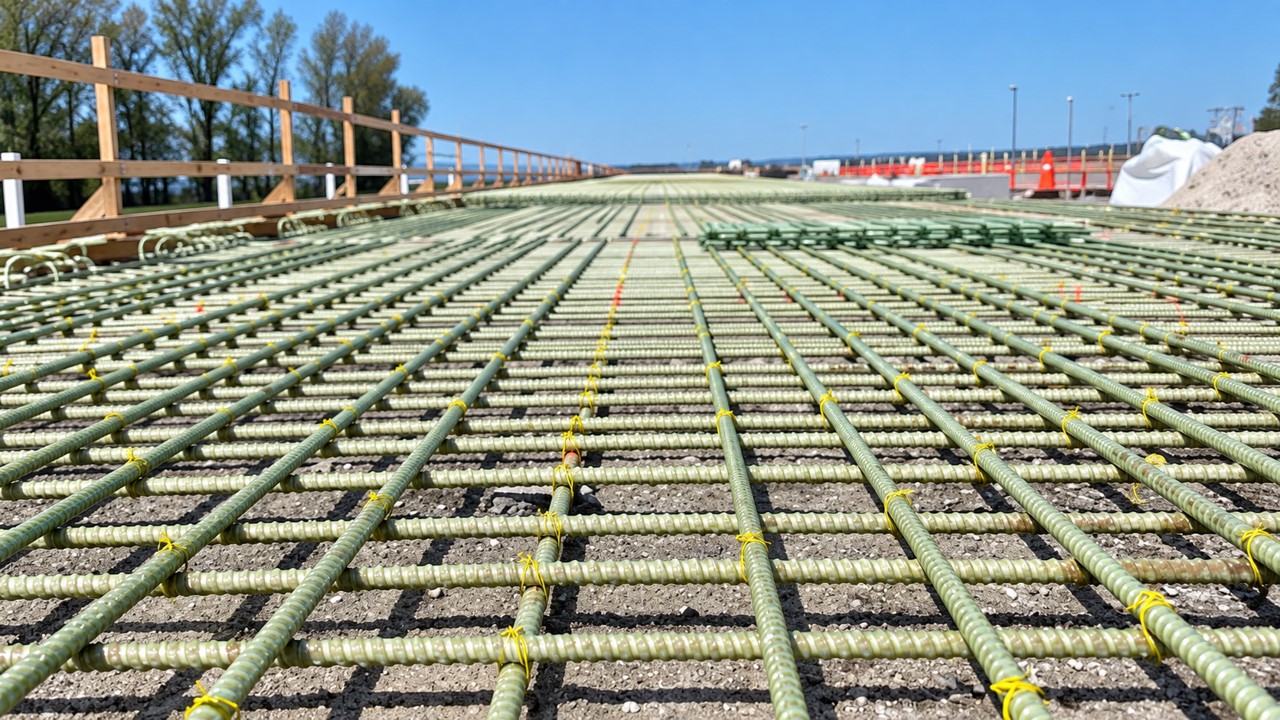
GFRP reinforcement for bridge decks, approach slabs, concrete pavements, hardstands, road infrastructure and other concrete elements exposed to aggressive environments.
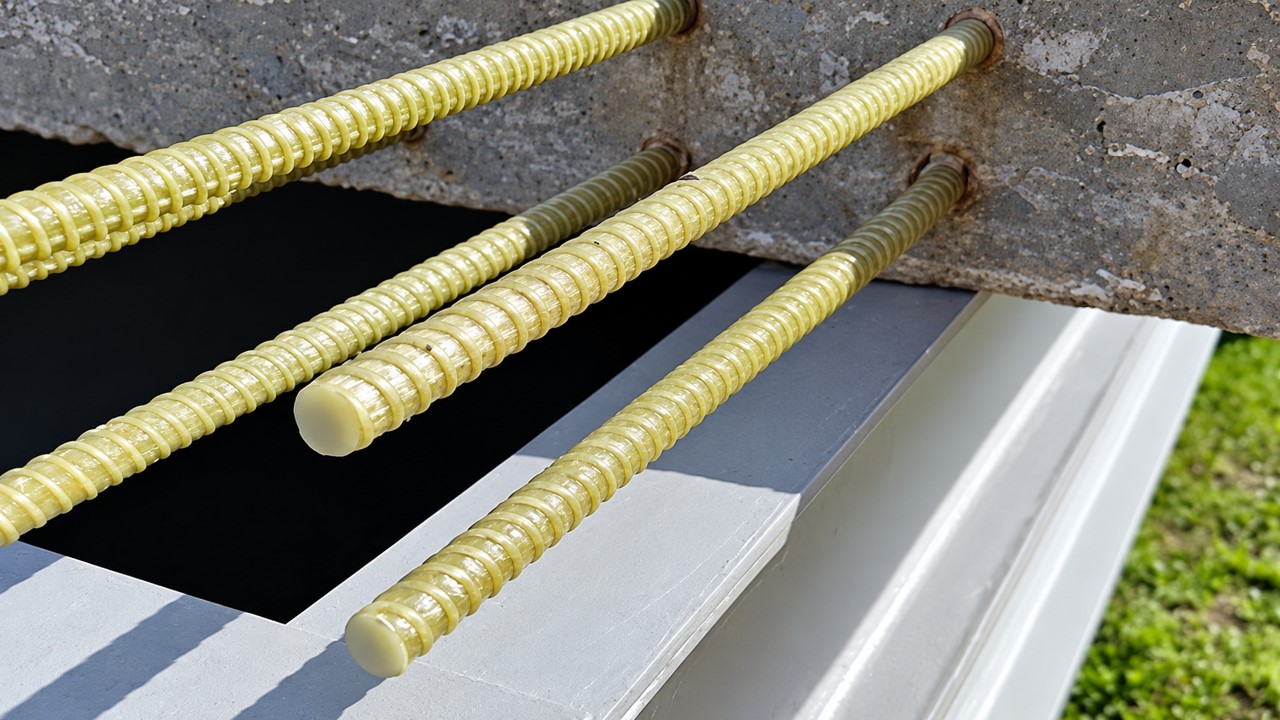
Reinforcement for pad and strip footings, ground slabs, equipment foundations, retaining walls and other engineered concrete foundation systems.
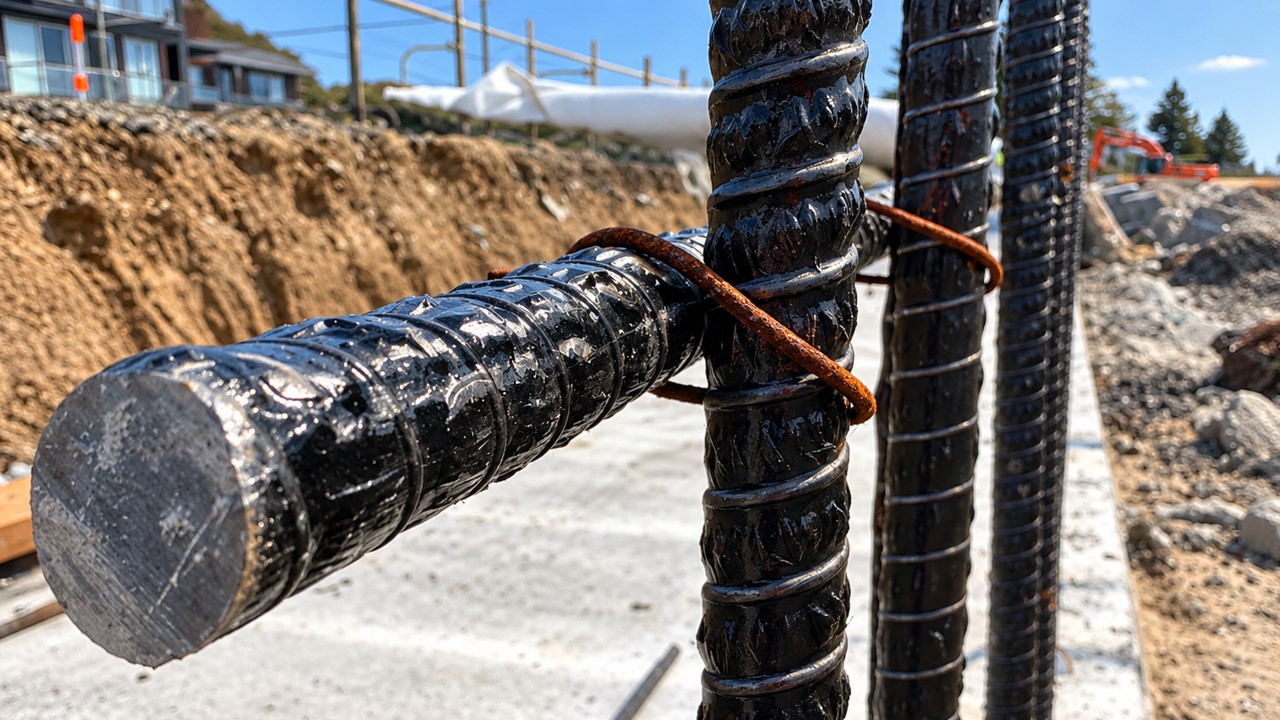
GFRP reinforcement for water and wastewater tanks, treatment structures, channels, reservoirs, pump stations, pits and concrete exposed to moisture or aggressive chemicals.
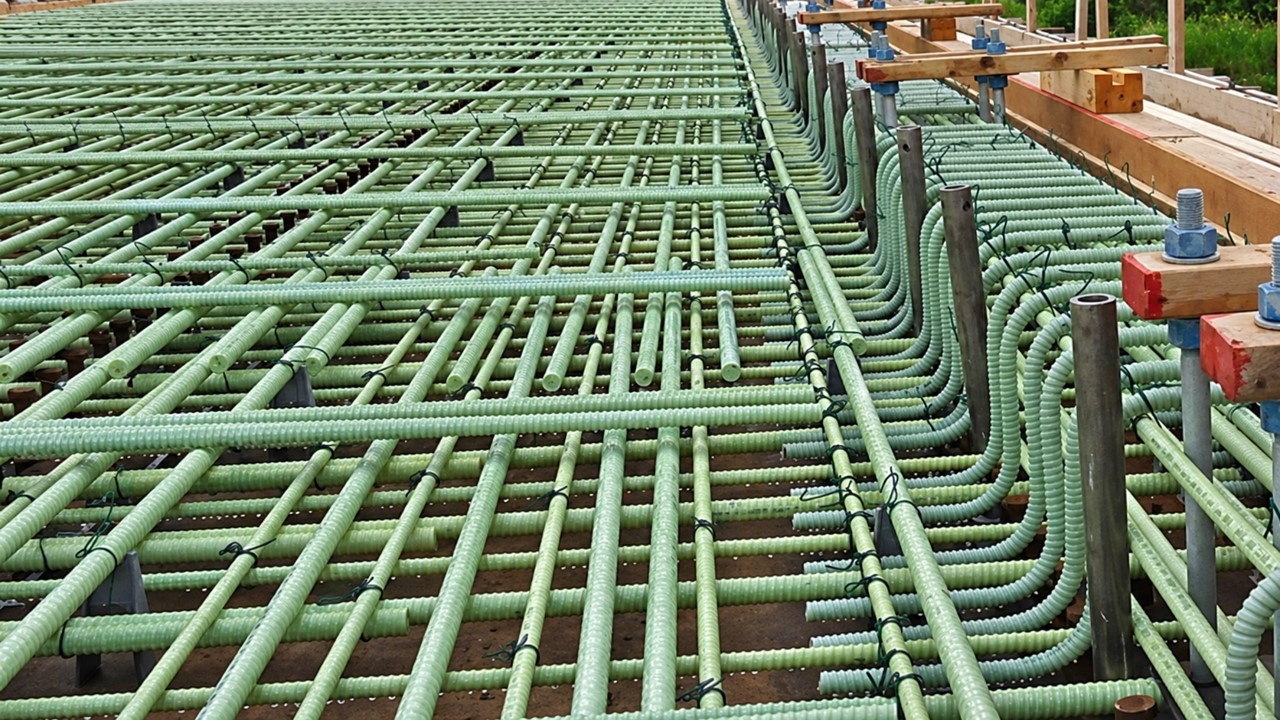
Reinforcement for appropriately engineered house slabs, commercial floors, suspended slabs, swimming pools, foundations and precast concrete elements.
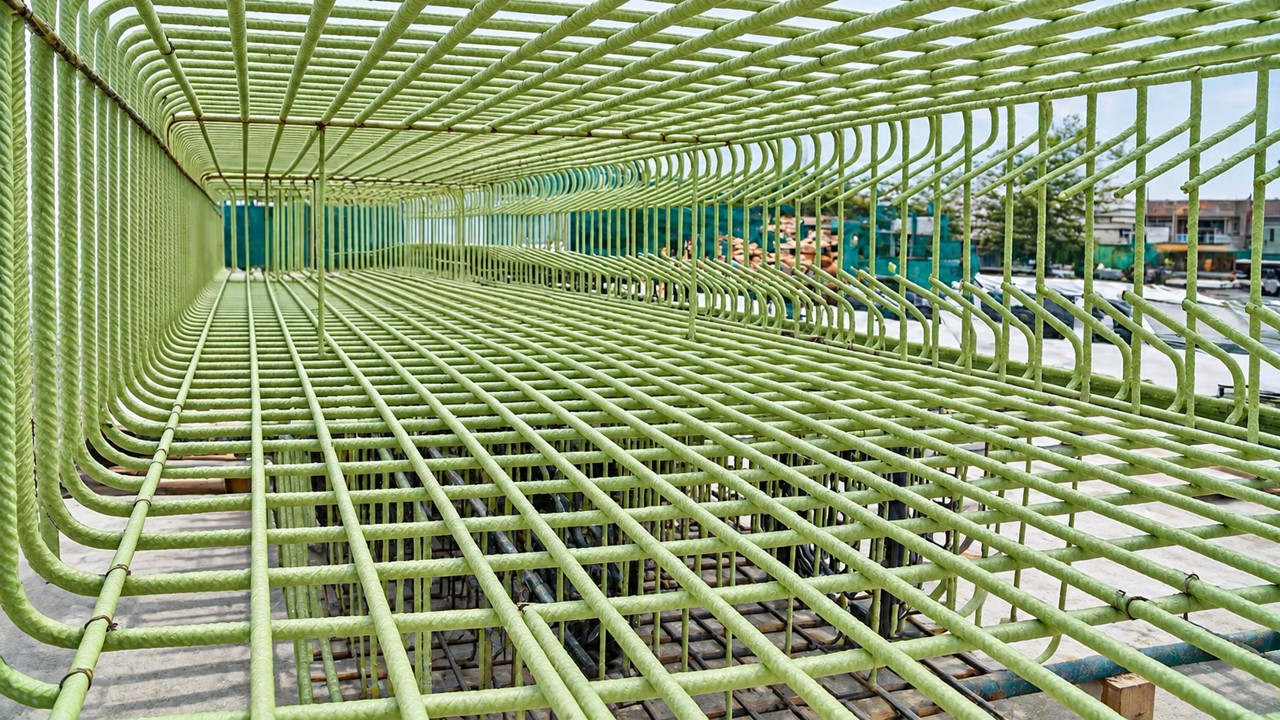
Non-conductive and non-magnetic reinforcement for rail infrastructure, electrical substations, electromagnetic-sensitive facilities, tunnelling, soft-eye openings and specialist civil works.
Installing DMREO™ GFRP Rebar
Installation should follow the approved reinforcement drawings, applicable project requirements and GFRP-specific installation guidance.
Confirm bar diameter, grade, spacing, lengths, laps, cover, bent bars, mesh requirements and supports.
Measure accurately and cut DMREO™ using suitable equipment intended for GFRP reinforcement.
Place bars according to the approved reinforcement drawings with the required spacing, cover and reinforcement layers.
Secure bars to prevent movement during concrete placement and confirm alignment, supports and cover.
Place and compact concrete according to the project specification while avoiding displacement or damage to the reinforcement.
Bent GFRP Reinforcement
Straight GFRP reinforcement should not simply be heated and bent on site in the same way as conventional steel reinforcement.
Where the reinforcement design requires 90-degree bends, L-bars, corner bars, starter bars, hooks or other project-specific shapes, these should be identified from the reinforcement drawings and manufactured in the required geometry.
Bent sections have different mechanical behaviour from the straight portion of the bar and therefore require appropriate engineering consideration.
GFRP Design Considerations
GFRP reinforcement has different mechanical behaviour from conventional reinforcing steel. This must be recognised during structural design, detailing and construction.
Lightweight Reinforcement
At approximately one-quarter the weight of steel, GFRP can create practical advantages throughout the supply and construction process.
Technical Documentation
DM Composites can provide technical information to support specification and engineering of DMREO™ GFRP reinforcement.
Frequently Asked Questions
Common questions about corrosion, weight, Grade 45 and Grade 60, Australian Standards, applications, bending and available sizes.
GFRP rebar is Glass Fibre Reinforced Polymer reinforcement used within concrete as an alternative to conventional reinforcing steel. It consists primarily of high-strength glass fibres embedded within a polymer resin matrix.
No. GFRP does not contain reinforcing steel and therefore does not rust like conventional steel reinforcement. This is one of its principal advantages for marine, coastal and corrosion-prone structures.
GFRP eliminates corroding steel reinforcement as a cause of concrete deterioration. Because it does not rust, it does not create the expansive steel-corrosion products that can contribute to cracking and spalling. Other concrete deterioration mechanisms can still occur.
Yes. DMREO™ GFRP reinforcement can weigh approximately one-quarter of conventional steel reinforcement, making it up to approximately four times lighter depending on the comparison.
GFRP can provide very high tensile strength, but a simple stronger-or-weaker comparison is misleading. GFRP has different tensile, modulus, ductility and failure characteristics and must be designed specifically as FRP reinforcement.
Grade 45 is DMREO™'s standard-modulus GFRP reinforcement range. Exact certified modulus, tensile properties and other mechanical values should be taken from the current Grade 45 technical data.
Grade 60 is DMREO™'s higher-modulus GFRP reinforcement range, intended for applications where increased reinforcement stiffness may be beneficial to the structural design.
DMREO™ is supplied for Australian applications with reference to AS 5204:2023 – Fibre-Reinforced Polymer Bars. Project-specific compliance should be verified against the applicable DMREO™ product documentation and engineering requirements.
Yes. Marine and coastal infrastructure is a strong application for GFRP because the reinforcement itself does not rust in chloride-rich environments.
GFRP can be used for appropriately engineered residential concrete applications including slabs and foundations. The reinforcement design must use the applicable GFRP properties rather than directly replacing steel bar-for-bar.
Straight GFRP reinforcement should not normally be bent on site in the same way as conventional steel. Required bent bars should be factory manufactured to the specified geometry.
The current DMREO™ range includes nominal diameters of 6, 10, 12, 16, 20, 22, 24, 28 and 32 mm. Current availability, lengths and Grade 45 or Grade 60 options should be confirmed with DM Composites.
Need GFRP Reinforcement?
DM Composites can assist with DMREO™ product selection, Grade 45 and Grade 60 options, bar sizes, bent reinforcement, technical data and applicable AS 5204 documentation.
Enter your company details to access this resource.